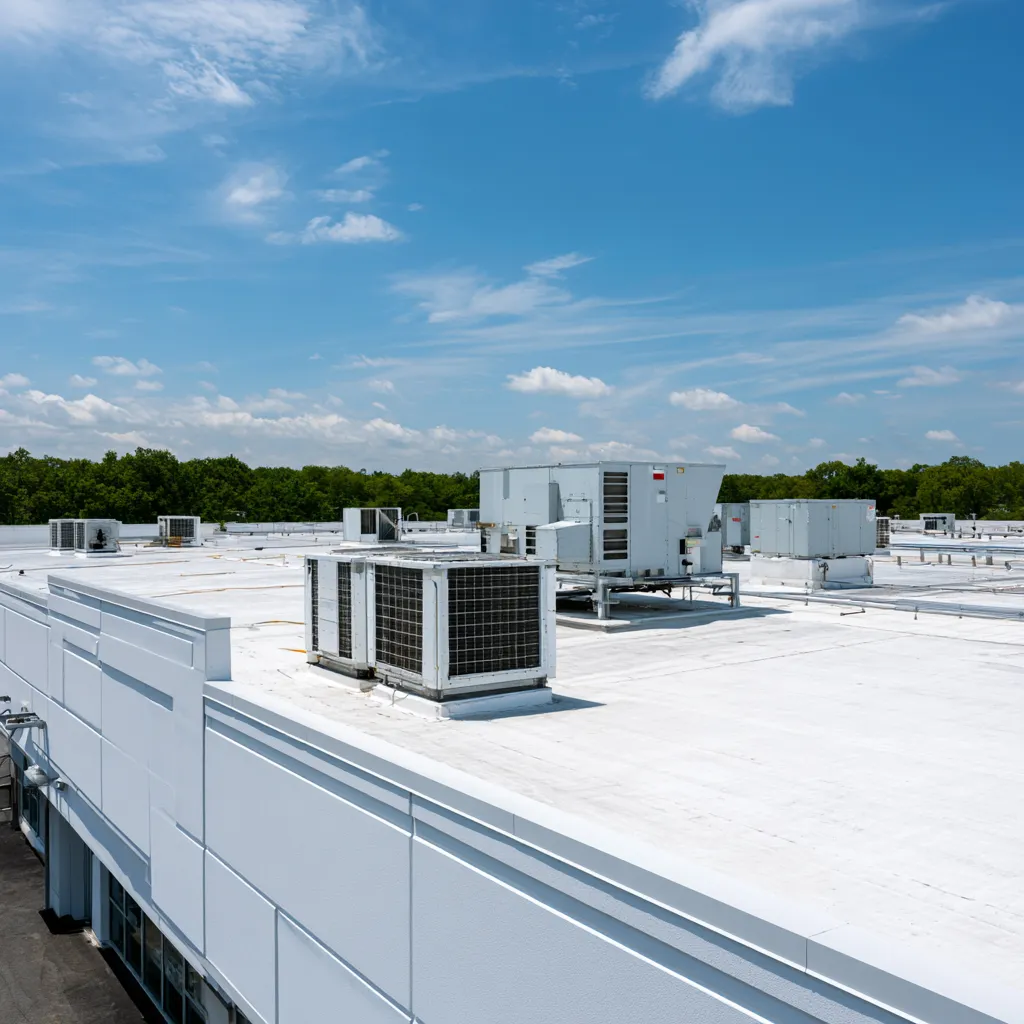
Flat Roof Repair in Rowlett, TX
A flat roof that leaks in the same spot after a repair is telling you about drainage. Send what you're seeing and our roofers read it.
How a low-slope roof is drained and detailed
Low-slope roofs don't shed water the way a pitched roof does. They move it slowly toward drains and scuppers that somebody has to keep clear, and anywhere the surface dips below that path the water simply stays. Water that stays is the beginning of nearly every recurring flat-roof problem in this city.
The drain is where to look first. One set slightly high, ringed with debris, or asked to serve more roof than it was sized for will hold a shallow pond for days after a storm, and nobody can price that correction from the ground or off an aerial photo. The commercial roofing hub sets these systems beside the rest. What comes back to you is the moisture readings, the drain notes, and a seam map of the roof.
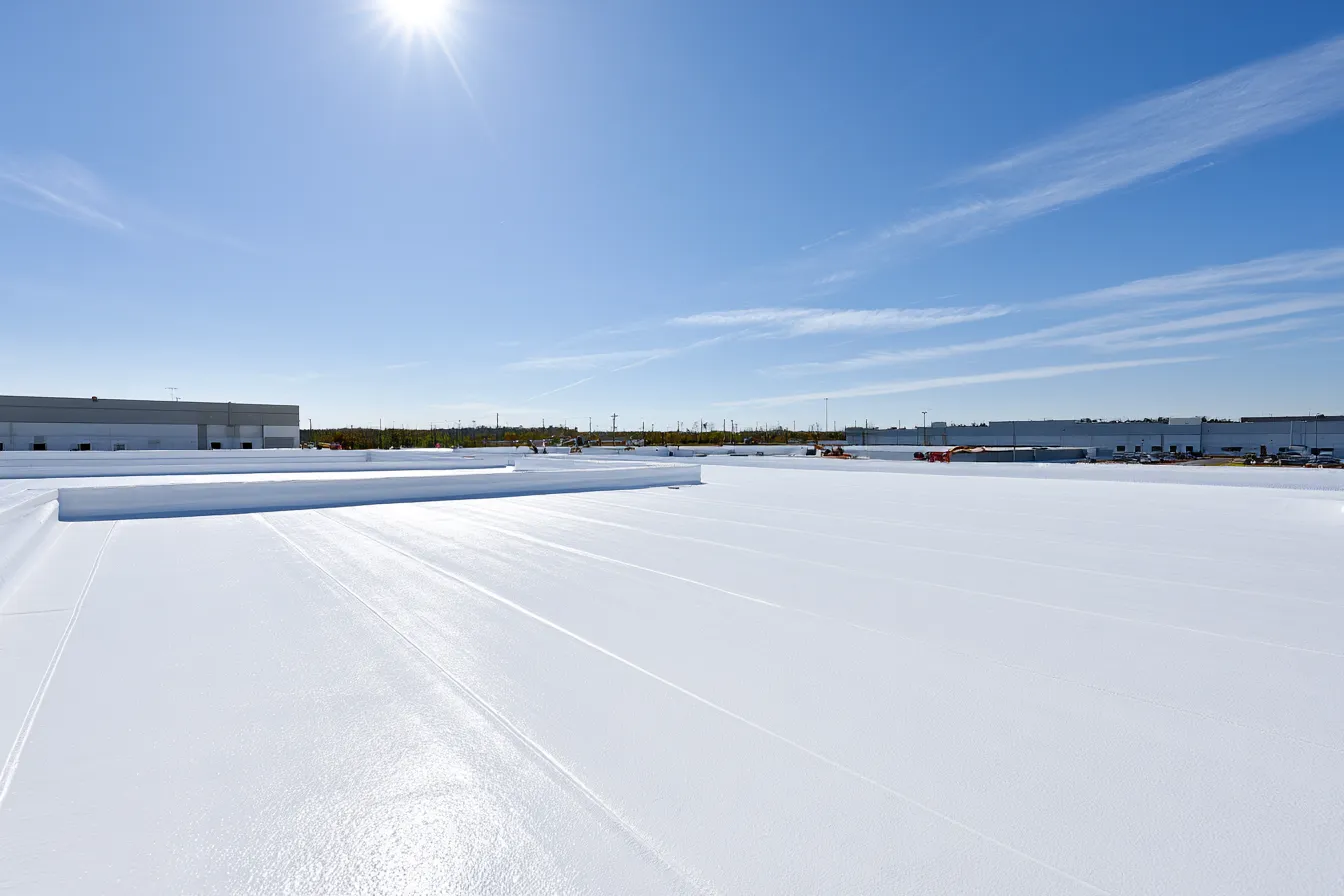
Flat roof systems used on Rowlett buildings
There is no universally best flat roof, only the one that matches the building and how it is used. Slope, rooftop equipment, foot traffic and whatever the existing deck turns out to be do more to pick the system than any brand name does.
- 01EPDM rubber membrane
- A synthetic-rubber sheet with a long track record, classically black and flexible when it turns cold. Its usual weak point is the seam where two sheets are joined, so seam work and upkeep decide how it ages.
- 02Modified bitumen
- Asphalt in reinforced rolls, applied in layers, and the modern descendant of tar and gravel. It's tough underfoot, which makes it a sensible pick on a smaller roof that gets walked.
- 03Built-up roofing
- The old layered felt-and-asphalt system, usually finished with gravel, still sitting on plenty of older buildings here. It's heavy and slow to install, and it has a century of track record behind it.
- 04Welded single-ply
- A light-colored sheet joined with hot air instead of adhesive, which is the main thing separating it from rubber. The TPO page covers where it fits and where it doesn't.
- 05Tapered insulation
- Boards cut to a slope and built up under the membrane to send water toward the drains. It's how a dead-flat deck is given fall without anyone touching the structure.
- 06Drains and scuppers
- Primary drains carry the water off, and overflow scuppers exist for the day the primary ones clog. The code assumes a blocked drain, which is why the backup isn't optional.
- 07Flashings and parapets
- Every wall, curb and pipe the membrane meets is closed with flashing cut and fit up on the roof. Parapets get their own detail, and they're a common place for an old roof to let go.
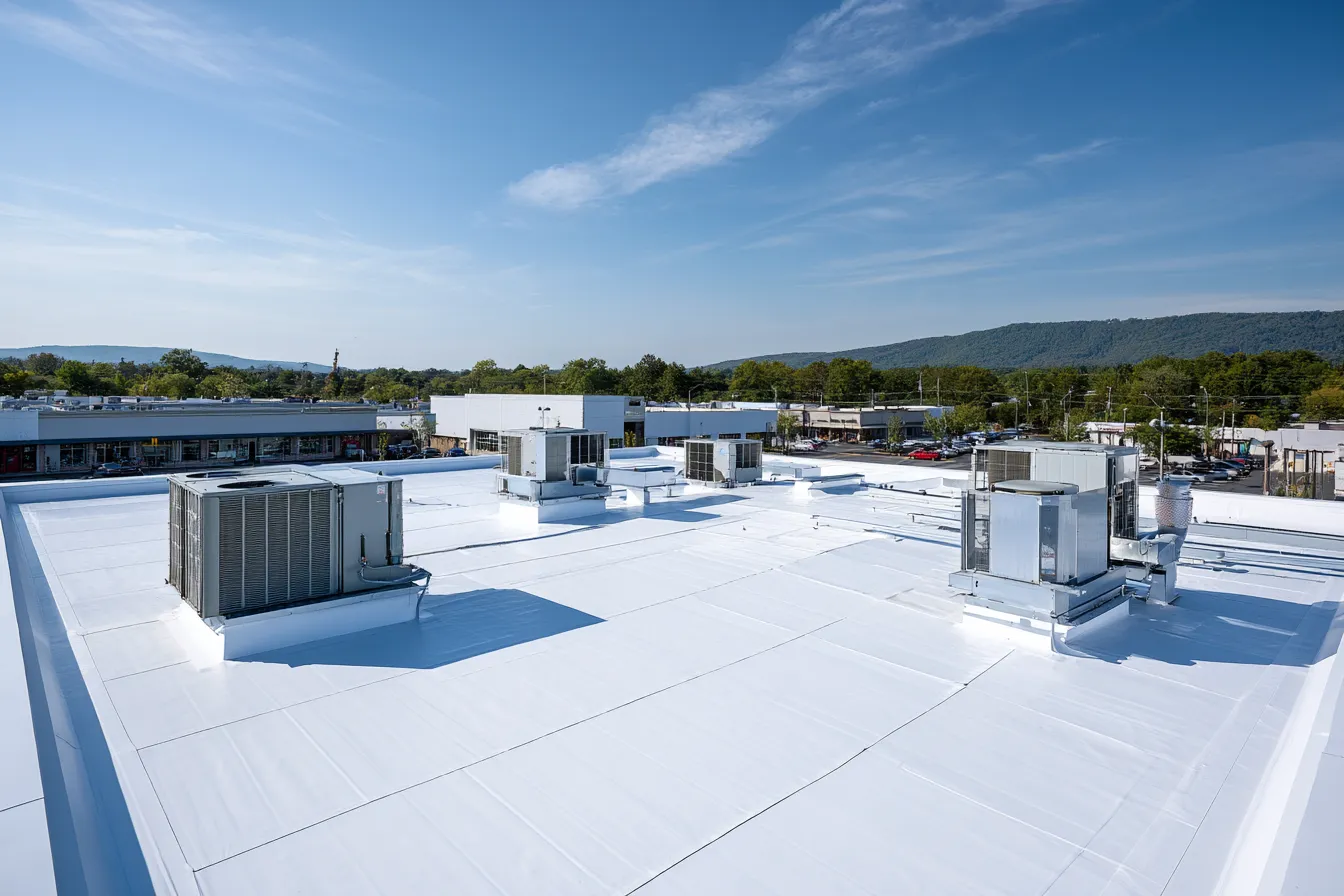
Whatever the moisture survey finds under the surface is named before a system is picked, because a decision made over wet insulation is a decision made twice.
How a recurring flat roof leak is chased down
No repair goes in before the water's path is understood. That is the standard our roofers hold a low-slope roof to, and it is the reason the same leak doesn't come back the following spring.
Find the water
The roof is walked wet and dry, drains and scuppers are checked for fall and blockage, and moisture readings go in wherever the deck sounds suspect. Where water enters and where it shows up inside are rarely the same place.
Fix the drainage
Correcting a pond means giving the water somewhere to go: clearing or resetting drains, adding one where the roof is short of them, or building fall with tapered boards. Patching the wet spot without that buys the same leak next year.
Close the details
Seams, flashings, curbs and parapet edges are reworked or replaced wherever they've opened up. Those joints are where low-slope roofs actually fail, so they take the time the open field doesn't need.
Why ponding is the recurring Rowlett flat roof problem
Water is supposed to be off a low-slope roof within a couple of days of the rain stopping. Anything still sitting up there after that is doing damage, and the longer it sits the more it costs to undo.
- Standing water days later: a pond that outlasts the weather is the single most common cause of a failing flat roof.
- Weight you can't see: water is heavy, and a deep enough pond deflects the deck, which lets it hold more water still.
- Blistering across the surface: bubbles mean moisture or air trapped under the membrane, and they spread out from wherever they began.
- Seams that have opened: joints let go long before the open field wears out, which is why leaks so often track along a line.
- Debris around the drains: leaves and grit turn a working drain into a pond, and it's the cheapest thing on this list to put right.
- A patch that keeps failing: the third repair in one spot isn't a bad patch, it's a drainage problem wearing a disguise.
None of that means a full replacement. Most low-slope leaks are repairable at the joint or the drain, and our roofers will say so when that's what the roof shows.
What a Rowlett flat roof repair is priced off
A flat roof repair is priced off how far the water traveled before it showed up inside. One open seam is a small job, and a deck holding saturated insulation across half its area is a different conversation, and only a survey separates the two. What you do about it stays on your own timetable, and the survey reads just as well next quarter as it does today.
What a low-slope repair is priced on- How much insulation reads wet
- Whether the deck has deteriorated
- Drains added, reset or cleared
- Tapered boards to build in fall
- Length of seam being reworked
- Parapet and edge metal condition
- Rooftop equipment to work around
- Coverings already on the roof
What Rowlett weather does to a flat roof
Rowlett is a hail and wind market, and low-slope roofs take it differently than pitched ones do. There are no granules to lose and no missing shingles to count from the street, so storm damage on a flat roof tends to look like nothing at all until the next long rain finds it.
- 01Wind at the edges
- Uplift works on a membrane from the perimeter inward, which is why edge metal and the attachment spec matter more than the middle of the roof does. A corner that has started to lift is worth taking seriously early.
- 02Two counties, one city
- Rowlett sits across the Dallas and Rockwall county lines, so the logged storm history for a building on the west side isn't automatically the file for one on the east. The storm record page keeps the county reports as they were filed.
After a bad spring, the flat roofs that get looked at are the ones somebody remembered to walk. There is nothing lying in the parking lot to remind you.
Flat roof questions from Rowlett building owners
What owners ask once the same leak has come back.
Q1Why does the same spot keep leaking after it's been repaired?
Q2How long can water sit up there before it's a problem?
Q3Is EPDM or modified bitumen better for my building?
Q4Does a flat roof need to be completely flat?
Q5How would I know if the insulation underneath is wet?
Have your Rowlett flat roof assessed
Tell one of our roofers where the water sits, what's been repaired and how many times, and you'll get an answer on whether this is a drain, a seam or the system. The reading under the membrane is what separates the third from the first two.