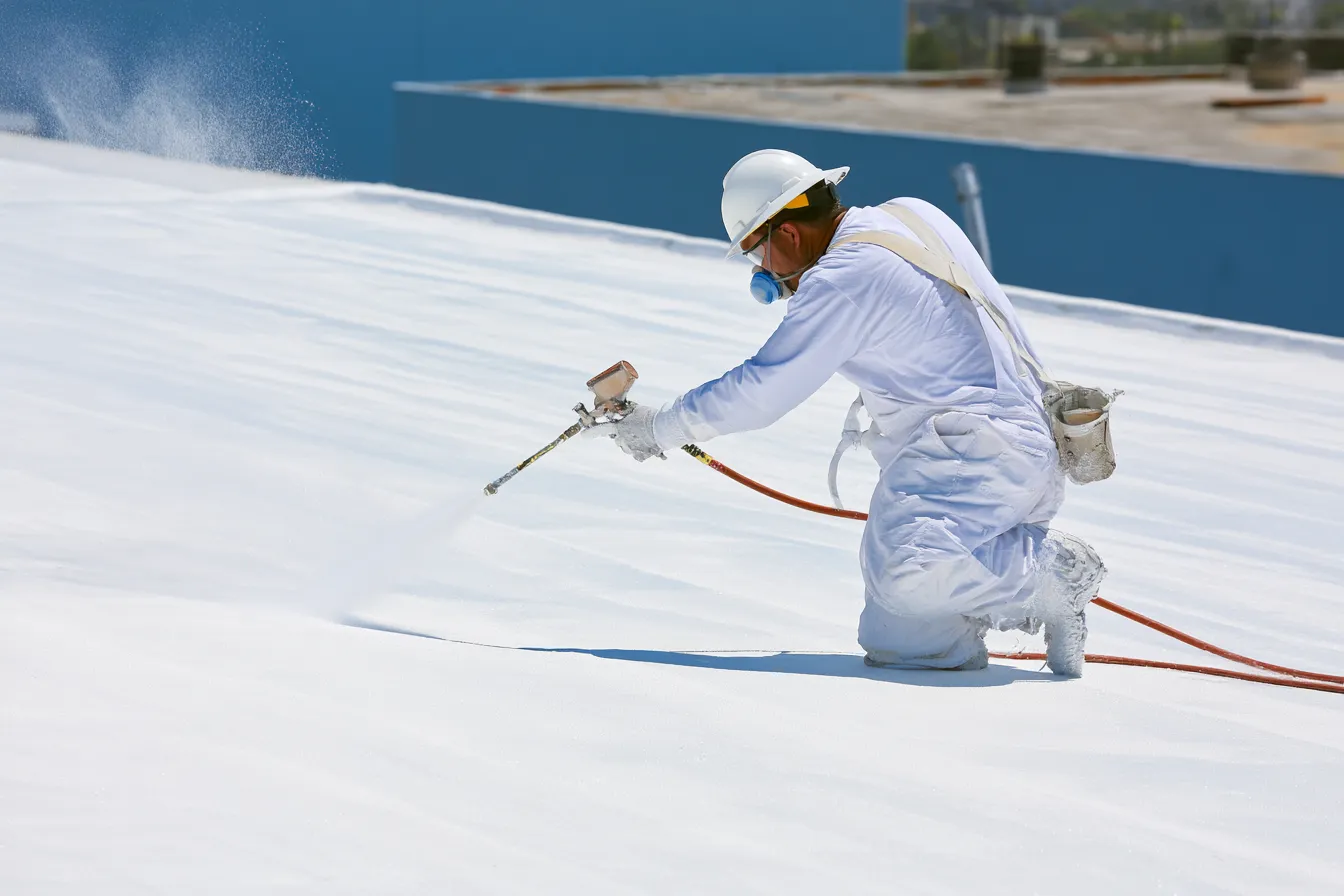
TPO Roofing in Rowlett, TX
TPO belongs on a wide open deck: long uninterrupted runs, a short list of things mounted up top, and a light surface that sends the summer sun back off the building instead of down into it.
What TPO gives a building and what it asks back
Rowlett Roofworks treats a TPO roof as one continuous skin rather than a covering assembled from pieces. The sheet goes down light-colored and flexible, and everywhere two sheets meet they are heat-welded into a joint meant to behave like the sheet itself.
Thickness is a specification you get to choose. A heavier sheet takes punctures and years of sun better than a thin one, and that matters most on a roof somebody walks every time a rooftop unit needs service. An eighties warehouse and a building finished last year get the same standard of look from our roofers; what they don't get is the same recommendation. The commercial roofing hub sets TPO beside the other systems used on buildings here. Whatever the answer is, the sheet spec and the weld method our roofers recommend are yours to keep on file.
Where TPO suits a Rowlett commercial roof
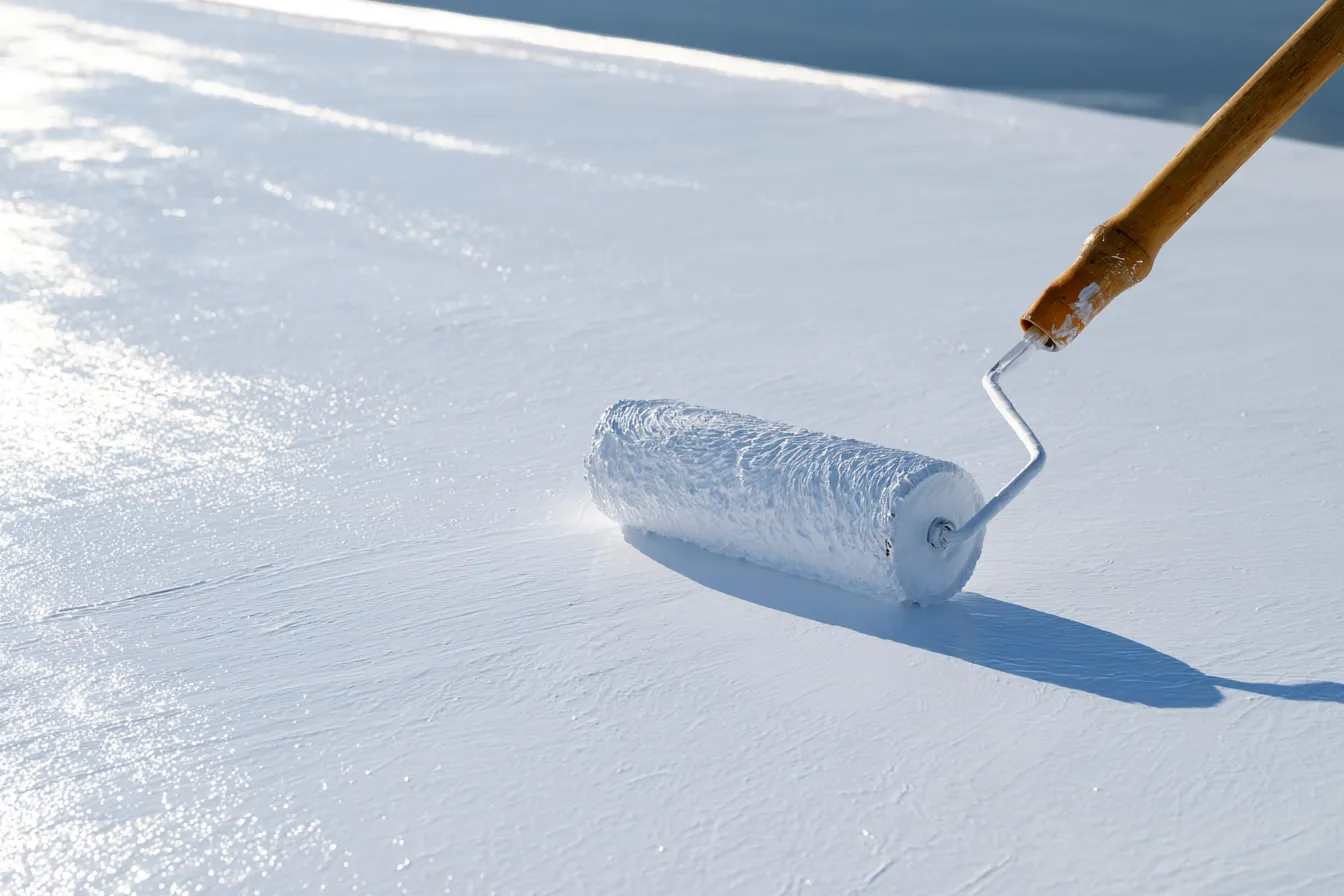
TPO suits a roof with room to run: a long, mostly open deck where the sheet can be rolled out and welded with few interruptions. Every parapet, curb, drain and pipe is a place the membrane has to stop, turn up and be sealed by hand, so a crowded roof is more work and more places to watch.
- 01A wide open deck
- Long uninterrupted runs are where single-ply does its best work. The fewer times the sheet has to stop and turn up a wall, the fewer joints there are to age.
- 02Insulation and slope
- What sits under the membrane decides how the roof drains and how the building holds temperature. Tapered boards are how a dead-flat deck is given somewhere for water to go.
- 03Sheet thickness
- TPO comes in more than one thickness, and the heavier sheets resist punctures and sun for longer. The thickness belongs in the written spec on the bid, and a bid that leaves it out has left the decision to whoever wrote it.
- 04How it is attached
- Membranes are mechanically fastened, fully adhered or ballasted, and wind load and the deck decide which. Attachment is an engineering decision before it is a cost one.
- 05Welded seams
- Two sheets are joined with hot air until they behave as one piece. A weld that was rushed or run cold is the failure nobody can see from the ground.
- 06Curbs and penetrations
- Every rooftop unit, pipe and drain is a hole the membrane has to close around by hand. These details take longer than the open field of the roof and they're where most leaks start.
- 07Walk pads for service
- A roof that gets serviced needs a protected path to the equipment. Without one, the same route across the membrane wears thin under boots and dropped tools.
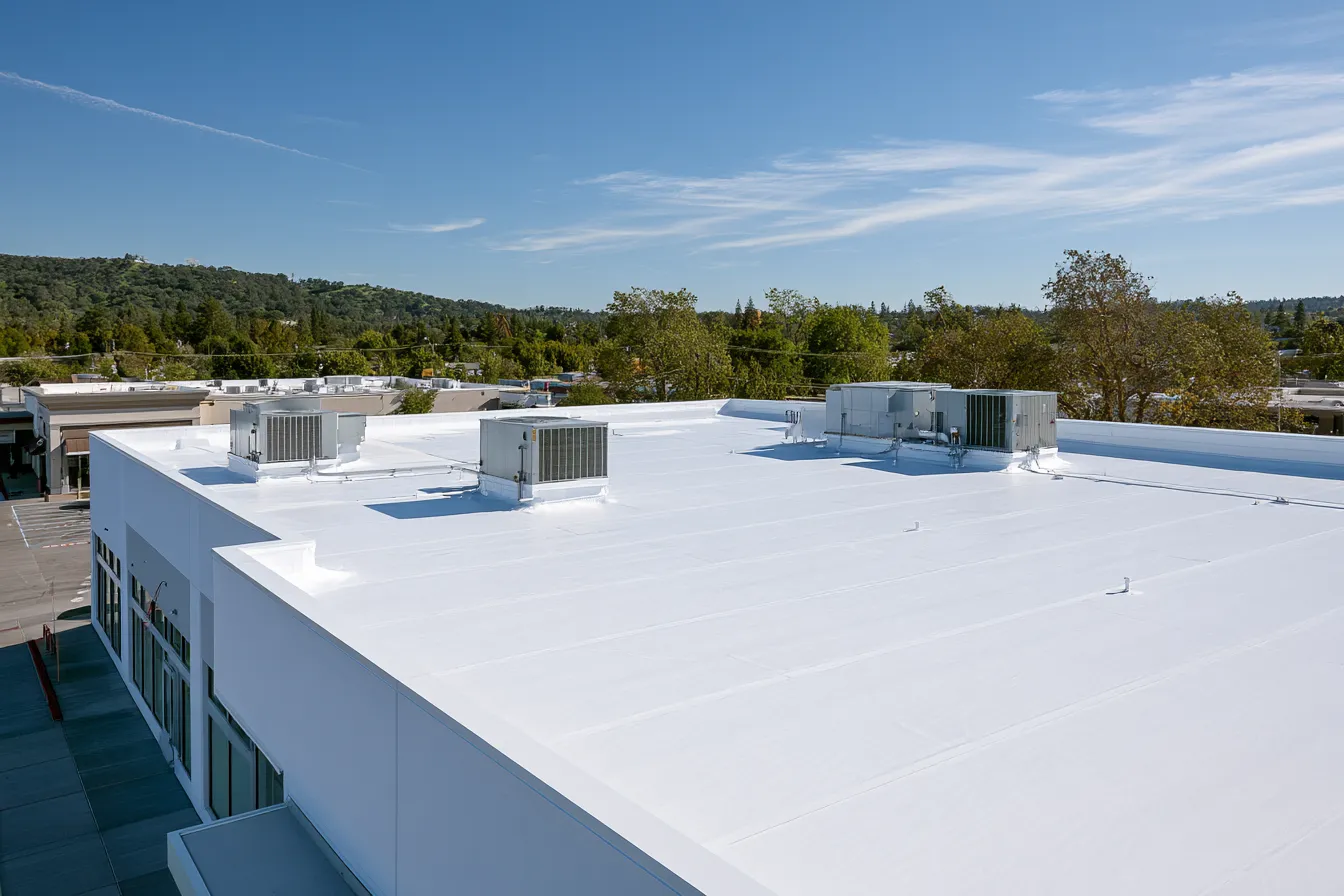
Whatever the survey turns up under the old covering is named before anything new goes over it, the same as it would be on a flat roof replacement.
What a Rowlett TPO installation involves
Our roofers survey the deck first, and the sheet goes down after that in a fixed order. Most of the schedule is the detail work around the edges and the equipment, and very little of it is the open field.
Survey and spec
One of our roofers walks the roof, establishes what the existing build-up is, and takes moisture readings wherever the deck is suspect. That survey settles thickness, attachment and how much the drainage has to change.
Insulation and attachment
The insulation layer goes down and is fastened or adhered to the deck to the wind spec the building calls for. Tapered boards are set here if the roof needs fall built into it.
Weld and detail
The sheets are rolled out, overlapped and hot-air welded, and the welds are probed along their length. Then every curb, drain, pipe and parapet is flashed by hand, which is the slow half of the job.
What points a Rowlett roof toward TPO
TPO isn't the answer for every building, and the roof usually tells you which way it leans. These are the conditions that point toward a welded single-ply sheet, and the ones that point somewhere else.
- A large simple footprint: long runs with little sitting on them are where a welded sheet is at its best.
- Cooling bills you notice: a light reflective surface sends summer sun back off the deck instead of into it.
- Ponding you keep seeing: single-ply over tapered insulation is one way to give the water somewhere to go.
- Two coverings already up there: once the roof is stacked that deep the job is a tear-off, and a new membrane is what goes back on.
- Grease or chemical exhaust overhead: kitchen and industrial vents point toward a membrane made to resist oils, which is usually PVC instead.
- Heavy foot traffic to equipment: a thicker sheet and protected walkways are what keep service trips from wearing the roof out.
The reverse is worth saying too. Plenty of buildings here are better served by a rubber membrane or a rolled asphalt system, and if yours is one of them, that's what you'll hear. The flat and low-slope page covers those.
What moves the price of a Rowlett TPO roof
A TPO roof is priced off the deck under it as much as the sheet over it. Two buildings with the same footprint can land a long way apart once you count the curbs, the drains and whether the old build-up has to come off.
What a TPO roof price is built from- Sheet thickness and membrane grade
- Mechanically fastened, fully adhered or ballasted
- How much insulation the roof needs
- Tapered boards to build in fall
- Curbs, drains and pipes to detail
- Whether the old build-up comes off
- Parapet height and edge metal
- Access for materials and debris
What DFW heat and hail do to a membrane
Heat and hail work on a membrane differently than they work on shingles. The sun is the constant one: a low-slope roof through a North Texas summer runs hot enough to age what sits under it, which is most of the argument for a reflective surface. Hail is the intermittent one, and on a flat roof what it leaves behind is hard to see.
- 01Damage that hides
- A hailstone can bruise or fracture a membrane without opening a hole anyone would spot, and none of it reads from the parking lot. That is why a low-slope roof is worth walking after a storm season instead of eyeballing.
- 02A reflective surface
- A light-colored roof sends part of the summer load back instead of passing it into the deck, and that can show up in what the building costs to cool. Whether the adopted energy code expects that reflectance on your roof is something our roofers check.
Dallas County's logged hail and wind history sits on the storm record page. Rowlett straddles two county lines, so a building on the west side and one on the east don't share a single file.
TPO questions from Rowlett building owners
What building owners ask before they ask what it costs.
Q1How long does a TPO roof last?
Q2Can TPO go over the roof that's already there?
Q3What actually fails on a TPO roof?
Q4Who stands behind the roof once it's on?
Q5Does it have to be white?
Ask whether TPO fits your Rowlett roof
Send the building's basics: what's on the roof now, what's mounted up there, and how long you plan to hold it. You'll get an answer on whether a welded single-ply sheet belongs up there, and if it doesn't, you'll hear that instead. Sheet thickness, the seam method and how the drains are laid out are what the figure turns on.