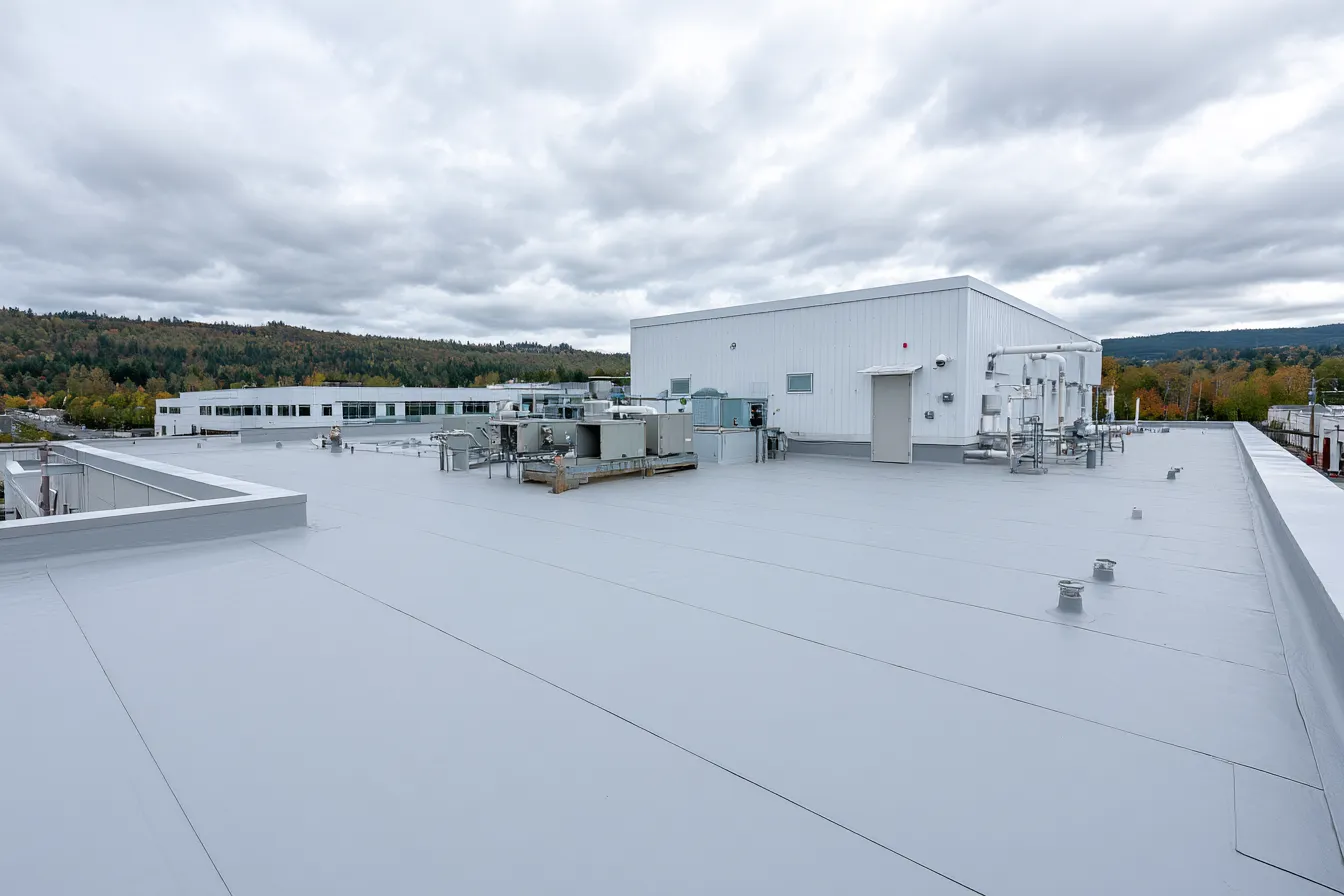
Roof Coating in Rowlett, TX
Can this roof be coated instead of replaced? Send what you know and you'll get the answer either way.
What a moisture survey shows before a coating is quoted
A coating is a fluid-applied layer, commonly silicone or acrylic, rolled or sprayed over a roof that is still sound. It re-seals the surface, reflects sun and adds warranted years for a fraction of what a tear-off costs. Rowlett Roofworks will tell you all of that, and then tell you the part that usually gets left out: none of it works unless what sits under the coating is dry.
Commercial buildings here went up in waves, and the ones that share a decade tend to reach the end of a roof at the same time. That is why restoration comes up in clusters along the same streets, and why the answer isn't the same for two buildings that look identical from the road. One of them may have a decade of substrate left. The other may have been quietly holding water since the last hard spring.
What a Rowlett roof restoration involves
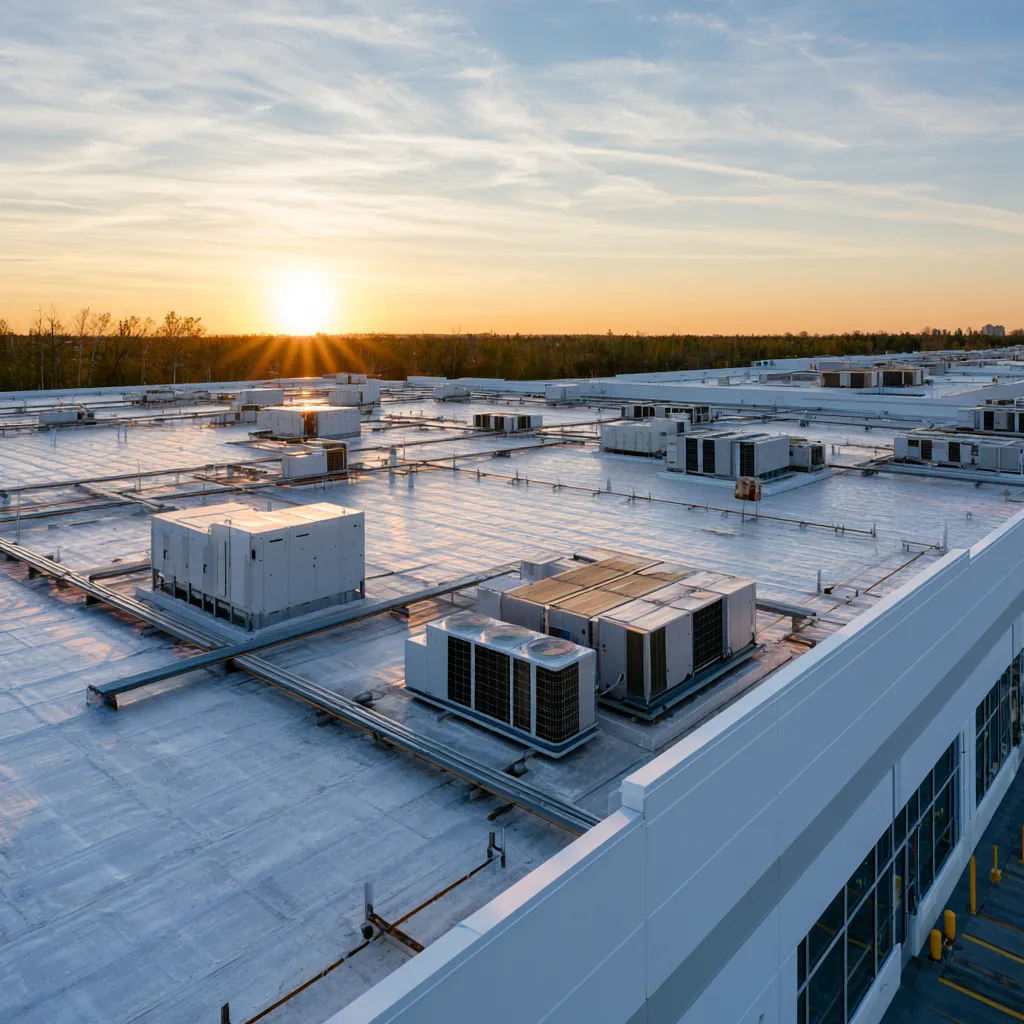
A restoration is mostly preparation. The coating is the last few hours of a job that spends most of its time cleaning, testing and rebuilding the details the new surface has to bond to.
- 01The moisture survey
- The roof is tested for water trapped in the insulation before anything else is decided. Coating over wet insulation seals the water in and buys you nothing at all.
- 02An adhesion test patch
- A small area is coated first to confirm the product will actually bond to the existing surface. Old membranes weather unevenly, and not every one of them takes a coating.
- 03Cleaning and priming
- The surface is washed back to sound material so the coating has something to grip. Grit, chalking and ponded residue all stop a coating from doing its job.
- 04Seam reinforcement
- Open seams, small splits and flashing details are rebuilt with reinforcing fabric before the field coat goes on. A coating is a skin, and a skin can't bridge a gap on its own.
- 05The field coat
- The coating is applied across the roof to a specified thickness, sometimes in more than one pass. Thickness is what the warranty gets written against, so it is a spec and not a judgment call.
- 06Silicone or acrylic
- Silicone holds up under ponding and heavy sun but picks up dirt and loses some reflectivity over time. Acrylic is typically cheaper and stays bright, and it is the wrong pick on a roof where water sits.
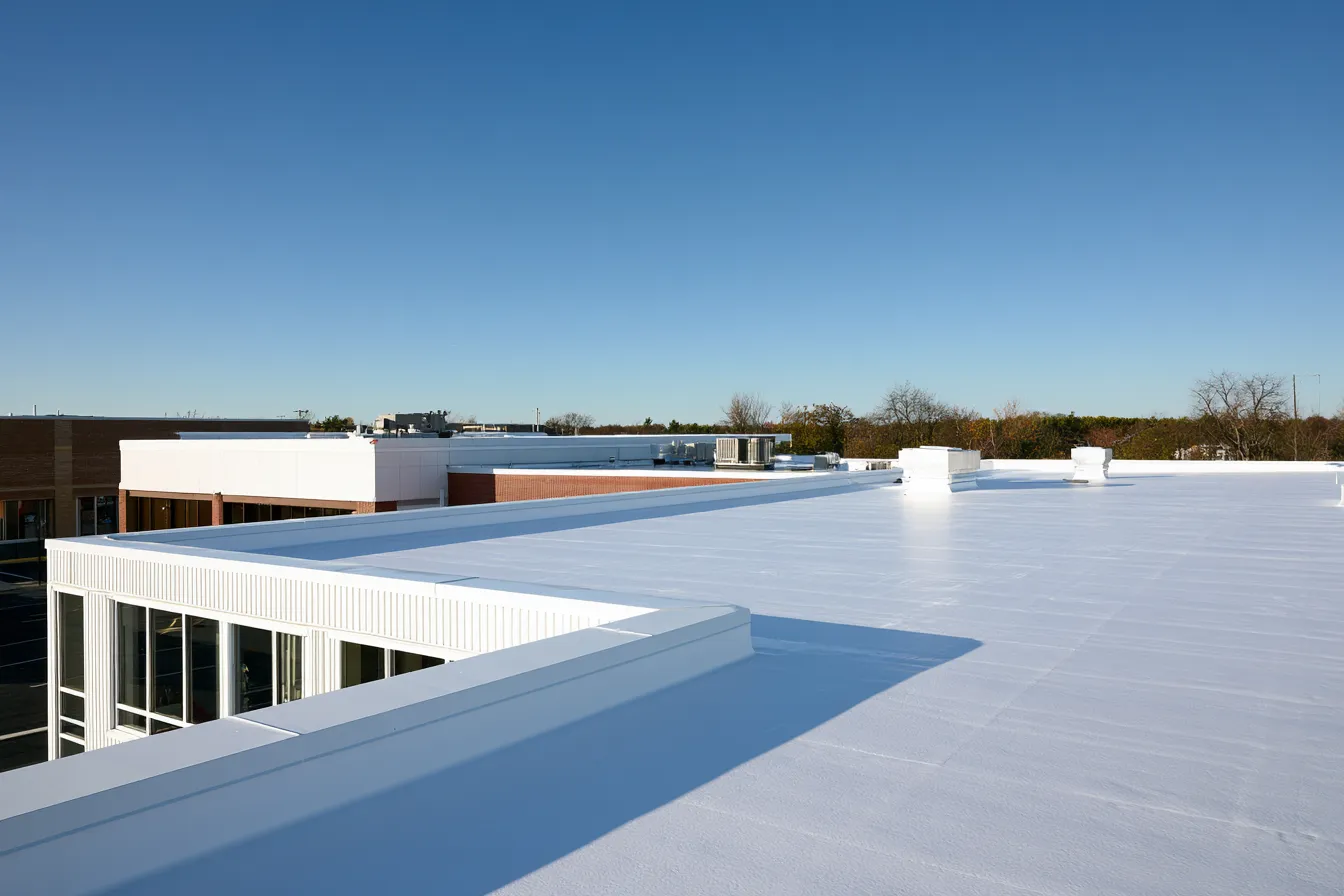
All of that assumes the survey came back clean. Where it doesn't, the conversation turns into a tear-off and a new system, which is a better use of the same money.
How the restore or replace call gets made
The surface tells you how the roof looks; the insulation tells you how much life it has left.
Read the surface
Our roofers walk the roof for splits, open seams, blistering and how much of the original membrane is still doing its job. A surface that has weathered but held together is a candidate, and one that is breaking up is not.
Test underneath
Moisture readings and, where those readings warrant it, a small core sample establish whether the insulation is dry. This is the step that decides the answer, and it is the one an eager quote tends to skip.
Match the system
If the roof qualifies, the coating chemistry is matched to what the roof has to handle, with ponding pushing the choice toward silicone. Film thickness is then set against the warranty term being written.
When a Rowlett commercial roof can still be coated
Restoration is a legitimate way to buy years on a roof that qualifies, and money thrown away on one that doesn't. These are the conditions that separate the two, and the ones lower down are worth reading twice.
- Dry insulation underneath: this is the whole test, and nothing else on the list matters if the survey comes back wet.
- A sound structural deck: a coating renews a surface and does nothing whatsoever for what is holding that surface up.
- Mostly intact membrane: a weathered roof takes a coating, and one that is splitting and delaminating has moved past the option.
- Leaks that are few and findable: isolated leaks can be repaired and then coated over, and persistent ones that repairs haven't stopped cannot.
- One covering up there: a roof already carrying two layers has to come off to the deck, and no coating changes that.
- A hold long enough to matter: restoration buys years, so it pays back an owner who still expects to own the building when those years run out.
When the survey says the insulation is saturated or the deck has gone, the honest answer is replacement and you will get it in those words. A coating over that roof is money spent on a surface that has already lost.
What moves the price of a Rowlett roof coating
Restoration generally lands well below a tear-off, which is most of its appeal. What moves the figure is how much repair the roof needs before the coating goes on, and how thick a film the warranty term calls for.
Where a restoration number lands- Coating chemistry and film thickness
- The warranty term being written
- Square footage and roof access
- Seam and flashing repair beforehand
- How much cleaning the surface needs
- Curbs and penetrations to detail
- Ponding areas needing extra build
- Condition of the existing membrane
What a coating buys on a Rowlett roof
The two things a coating gives you are years and reflectivity. The years come from re-sealing a surface that was still doing its job, and the reflectivity counts for more here than it would further north, because what loads a low-slope roof through a North Texas summer is mostly sun.
- 01Added service life
- A qualifying roof picks up a warranted stretch of extra life, and how long depends on the coating system and the film thickness that went down. It is an extension of what is already there, and it isn't a new roof.
- 02A cooler surface
- A reflective coating sends part of the summer load back off the building instead of into the deck, which can show up in cooling costs. How much it moves that number depends on what sits under the coating and how the building is cooled.
Restoration also postpones a tear-off instead of canceling it. Knowing which budget year the replacement lands in is worth about as much as the coating is.
Coating questions from Rowlett building owners
The questions that come up once a coating has been pitched.
Q1How much longer will a coating give me?
Q2Is a coating cheaper than replacing the roof?
Q3What happens if my insulation is already wet?
Q4Silicone or acrylic. Does the choice matter?
Q5Who stands behind a coating once it's on?
Find out if coating suits your Rowlett roof
Tell one of our roofers what you have been quoted and what the roof has been through, and you'll hear whether restoration is the right call for it. If the roof has passed that point, you'll hear that instead. The write-up stays yours either way, and you can put it in front of whoever signs.